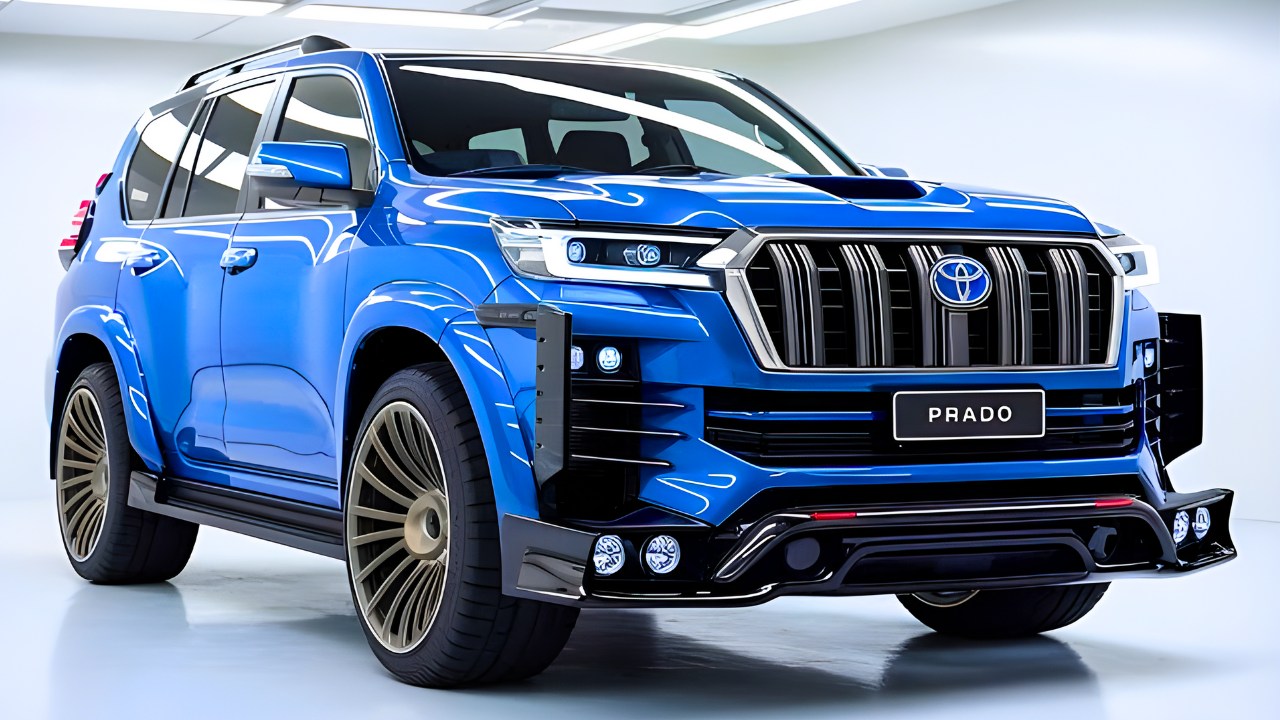
Toyota Prado 2026: The 2026 Prado arrives with a message Toyota rarely sends this loudly: the old comfort zone wasn’t enough anymore. The Prado used to survive on trust alone. You bought it because it never failed, not because it excited you. This new generation wants to be respected and desired and that shift changes what ownership will feel like.
This isn’t a nostalgia play. It’s a recalibration.
Strength you can feel before you drive
The new shape is unapologetically upright. Flat surfaces, sharp edges, a tall stance that doesn’t try to hide its mass. On the road, it commands space. Other vehicles move. That’s not attitude – that’s size and visual authority working together.
That authority comes with consequences. Tight parking, narrow streets, awkward basement ramps – these will test patience. You don’t “hop into” a Prado. You commit to it. The learning curve is real, especially if you’re used to something lower or lighter.
SPEC HIGHLIGHTS
- Turbocharged engine architecture – smoother torque delivery in everyday driving
- Reworked suspension setup – better control without losing load capability
- Modern driver assistance suite – real fatigue reduction on long journeys
- Upright, squared-off design – stronger road presence, tighter urban margins
Power delivery: less effort, more control
Toyota’s move toward turbocharged engines is about behavior, not bragging rights. The older Prado asked you to work for momentum. The 2026 model is expected to respond earlier, with torque arriving where real driving lives -low and mid-range.
In traffic, this matters more than top speed. Pulling out of junctions feels calmer. Lane changes need less planning. The vehicle feels like it’s carrying its own weight instead of asking you to compensate for it.
Fuel consumption improves, but don’t romanticize it. Short trips will still hurt. Idle-heavy commutes will still show up at the pump. Long highway stretches are where the numbers finally make sense, and owners who travel often will notice the difference quickly.
Suspension reality: honesty over illusion
Toyota hasn’t turned the Prado into a soft-roader. The ride is more controlled than before, but it hasn’t abandoned its backbone.
Unloaded, sharp bumps come through. Speed breakers remind you this isn’t a crossover pretending to be tough. Load it up passengers, luggage, gear and the vehicle suddenly feels settled and composed.
This is where expectations matter. Many buyers assume size equals plushness. With the Prado, comfort improves with use, not emptiness.
Interior shift: useful, not charming
The cabin no longer feels frozen in time. Screens are larger. Interfaces are clearer. Driver assistance systems are now part of daily life instead of optional extras.

This makes the Prado easier to live with:
- Better visibility through cameras
- Less fatigue on long drives
- More information when you actually need it
What it loses is timeless simplicity. Older Prados aged quietly. This one will age visibly. Screens date. Software becomes old. Touch surfaces show wear faster than knobs and switches.
Toyota reliability still anchors the experience, but this Prado depends more on systems than its predecessors ever did.
How it behaves where you actually drive
City use is manageable, not friendly. The high seating position helps awareness. The size demands respect. You’ll think twice before squeezing into tight spots.
On highways, the Prado feels exactly like what it is: a long-distance machine. It tracks straight, shrugs off bad surfaces, and reduces the mental load of hours behind the wheel.

Noise insulation should be better, but tire choice will matter more than most buyers realize. Aggressive replacements can undo a lot of refinement.
Ownership costs and long-term thinking
Servicing remains structured and predictable one of Prado’s biggest strengths. Parts availability and mechanical familiarity work in your favor.
The concern lives beyond basic maintenance. Hybrid components, adaptive systems, and layered electronics introduce uncertainty once warranties expire. Not catastrophic, but not negligible either.
Resale stays strong because the Prado name still means something tangible. This design will also age well visually, which helps.
The late realization
Most owners won’t discover a flaw they’ll discover a truth: the Prado is more vehicle than they regularly need.

It rewards commitment. If it’s underused, the size, fuel consumption, and maintenance feel heavier with time. The 2026 model hides that better than before, but it doesn’t eliminate it.
The 2026 Toyota Prado doesn’t chase trends or nostalgia. It simply acknowledges that buyers want strength without suffering for it every day.
Whether that balance works for you depends on how often you actually use what it offers not how much you like the idea of it.