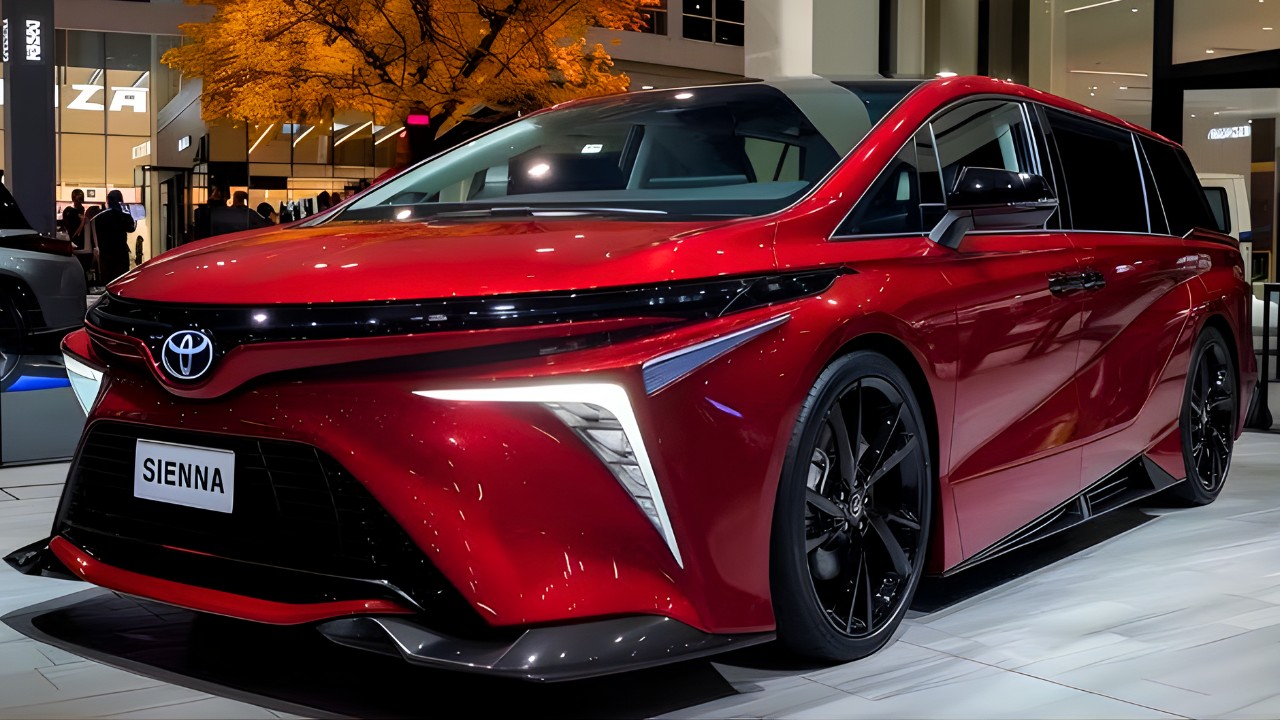
Toyota Sienna 2026: Minivans don’t win popularity contests, but they win real life. The 2026 Sienna doesn’t pretend otherwise. Instead of chasing style trends or pretending to be an SUV, it doubles down on what actually matters when a vehicle becomes part of your daily routine: calm rides, predictable efficiency, space that works without effort, and safety tech you stop thinking about because it just does its job.
This update isn’t dramatic. It’s deliberate.
What Toyota focused on this time
Toyota didn’t reinvent the Sienna’s identity. They refined the parts families actually complain about after living with a vehicle for years.
Expect quieter insulation, smoother suspension tuning, and small interior changes that reduce fatigue rather than impress in photos. Doors slide easier. Seats feel more supportive over long drives. Storage is shaped around real objects, not design sketches.
It’s evolution aimed at ownership, not headlines.
Spec highlights
• Hybrid-only powertrain with improved efficiency tuning
• Smooth automatic transmission behavior focused on low-speed comfort
• Front-wheel drive standard, all-wheel drive option expected
• Lower center of gravity for stability and ride comfort
• Updated safety and driver-assist hardware
• Large infotainment display with faster response
• Flexible seating with easy fold-and-slide mechanisms
• Improved cabin sound insulation
These choices aren’t exciting they’re reassuring.
How it feels from the driver’s seat
The biggest change you notice isn’t power. It’s calm.

The hybrid system operates more seamlessly, especially in traffic. Starts and stops feel smoother. Throttle response is gentle but immediate enough for city driving. You’re not thinking about what the drivetrain is doing which is exactly the point.
Steering stays light. Visibility remains excellent. The van feels easier to place in tight areas than its size suggests, and parking assist systems quietly reduce stress in crowded lots.
This is a vehicle built for stoplights, school zones, and highway stretches not dramatic acceleration.
Comfort that shows up after hours, not minutes
Short test drives rarely reveal what the Sienna does best. Long ones do.
Seats are shaped to reduce pressure over time. Climate control reaches all rows more evenly. Road noise is better managed, which matters when conversations, phone calls, or sleeping passengers are involved.
The suspension favors stability over softness. It absorbs broken pavement without floating, which keeps passengers comfortable without making the driver feel disconnected.
Space that works without instructions
Sliding doors open wide. Step-in height stays friendly. The floor remains low, making movement inside the cabin easier.

Second-row access is simple. Third-row seating is usable, not symbolic. Fold everything flat and the cargo area becomes genuinely useful not just technically large.
The Sienna’s real strength is that you don’t have to “think” about space. It adapts without drama.
Safety tech that behaves maturely
Toyota’s next-gen safety systems aim to feel less intrusive and more intuitive. Lane assistance, adaptive cruise, and collision mitigation work smoothly instead of snapping control away.
Alerts are clearer. Interventions feel predictable. Over time, drivers trust the systems instead of fighting them which is exactly how safety tech should behave.
For a family vehicle, this matters more than adding yet another screen.
Hybrid efficiency in real-world terms
Fuel savings don’t show up as excitement. They show up as fewer stops, smaller monthly expenses, and less anxiety on long drives.
The Sienna’s hybrid setup continues to reward steady driving, especially in urban use. Heavy loads and high speeds still affect consumption physics doesn’t disappear but overall running costs stay lower than similarly sized non-hybrid alternatives.
That adds up quietly over years.
The downsides buyers usually discover later
No update fixes everything.
Acceleration remains adequate, not inspiring. Passing at highway speeds requires patience. The driving experience prioritizes smoothness over engagement which some drivers interpret as “boring.”
Replacement tires, while not exotic, still aren’t cheap due to size. And while reliability remains a strong point, hybrid systems demand proper maintenance ignoring service schedules eventually costs money.
This isn’t a vehicle you buy for fun behind the wheel.
Everyday life with it
Morning school runs feel calmer. Grocery trips don’t require packing strategy. Weekend travel is easier on everyone inside. Sliding doors and low floors turn chaotic situations into manageable ones.
It becomes background support and that’s the compliment.

You stop thinking about the vehicle and start focusing on the people inside it.
Who this van truly suits
Families that value comfort, predictability, and low stress. Drivers who keep vehicles long-term and care about operating costs. People who prioritize safety, space, and ease of use over image.
If excitement, style statements, or sharp driving dynamics top your list, this isn’t the answer.
Final perspective
The 2026 Toyota Sienna doesn’t try to change opinions about minivans. It simply proves, again, why they exist. Better comfort, hybrid efficiency that pays off quietly, and safety tech that feels grown-up make this update less about wow moments and more about living with fewer annoyances.
For buyers who measure value in years instead of first impressions, the Sienna continues to make a very strong case precisely because it doesn’t try to be anything else.